On a summer night in 1950, Northwest Airlines Flight 2501 and its 58 passengers disappeared over Lake Michigan on the way to Seattle from New York.
Diver Valerie van Heest and her nonprofit, Michigan Shipwreck Research Association (MSRA), have been searching for the lost DC-4 plane for the past 14 years.
“Even though we didn’t find the DC-4 wreckage,” van Heest said, “we did find nine shipwrecks.”
There are at least 6,000 shipwrecks across the Great Lakes, and van Heest belongs to the network of nonprofits, government agencies and citizen scientists working to find and document them.
“These vessels are telling us where we came from,” Carrie Sowden, the archaeological and research director for the National Museum of the Great Lakes, said.
At the bottom of the lakes, there are 17th-century sloops, schooners and brigs that expanded the fur trade; 20th-century diesel bulk freighters; and steamships that, throughout the 1800s, carried the passengers and iron and coal behind the rise of industry in the Midwest.
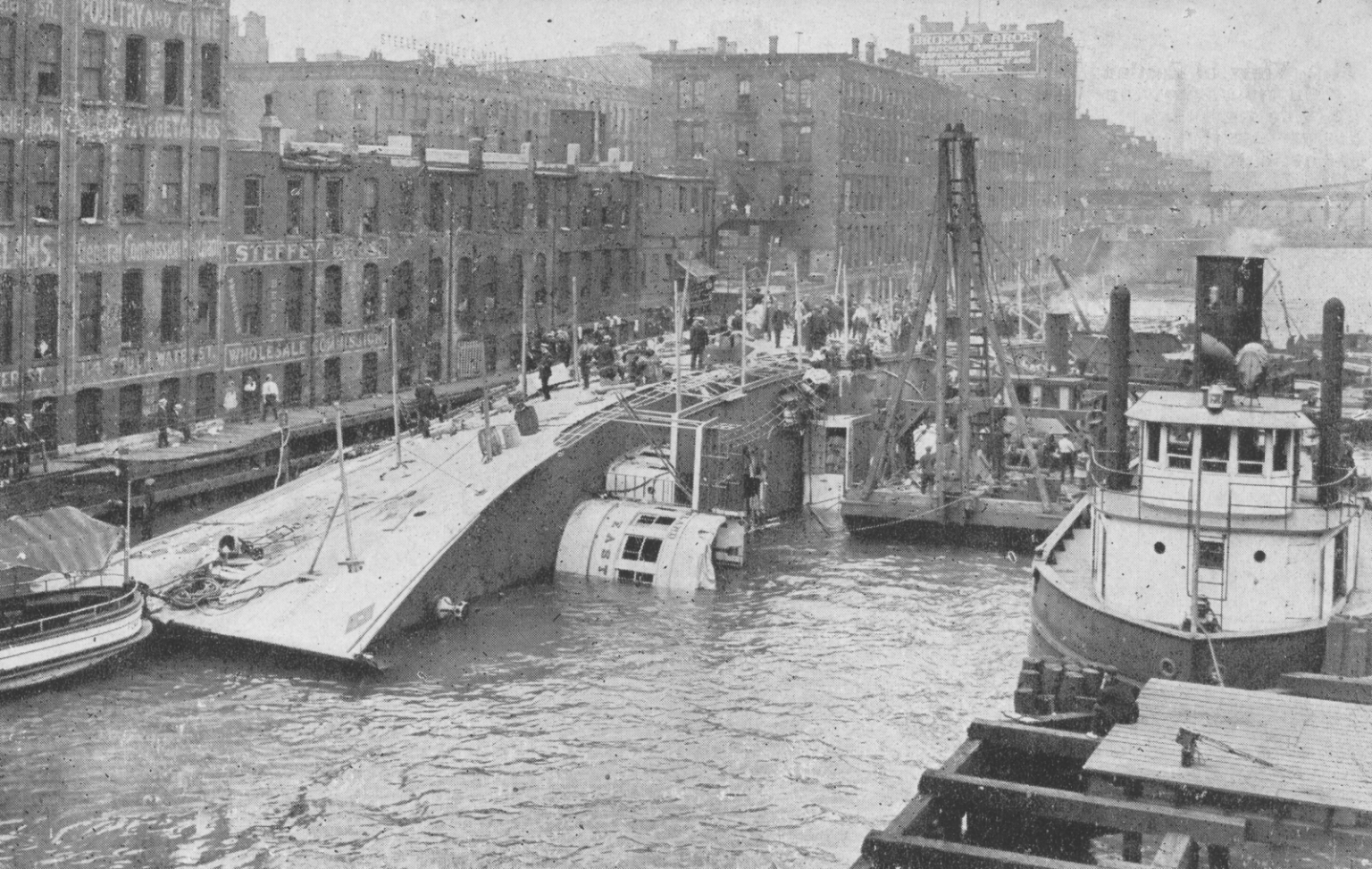
And the wrecks include more than just ships. More than 1000 aircraft sit at the bottom of the Great Lakes, including 1870s hydrogen balloons, NASA rockets and two hundred military planes that crashed during World War II as pilots trained to take off from and land on aircraft carriers. Off of Manitowoc, Wisconsin, pieces of Sputnik rained over Lake Michigan in 1962.
While ocean saltwater degrades shipwrecks, the Great Lakes’ chilly freshwater preserves them remarkably well, expanding possibilities for underwater archeology. Nonetheless, more than half of known shipwrecks on the Great Lakes have yet to be found and identified.
“Everyone loves a mystery.” van Heest said. “Everyone loves pondering and figuring out what happened. But we’re the people who spend all of our free time trying to figure out if we’re right.”
The present era of Great Lakes diving grew out of a series of transformative developments in the 1980s and early ’90s. Invasive zebra mussels cleared waters of phytoplankton, granting unprecedented visibility to exploratory divers who could then document their discoveries with newly advanced underwater photographing technologies. In 1988, the Abandoned Shipwrecks Act transferred responsibility to states to protect shipwrecks in their waters, and as states outlawed “treasure hunters and unauthorized salvagers” from taking artifacts for themselves, divers shifted their focus from sport diving to preservation.
Tamara Thomsen is a maritime archeologist at the Wisconsin Historical Society, whose Maritime Preservation and Archeology initiative is among several state programs developed in response to the Abandoned Shipwrecks Act. She leads surveys of shipwrecks and other “submerged cultural resources,” like inundated mines and Native American villages, with the goal of assessing sites’ eligibility for the National Register of Historic Places. But first, it is necessary to make an identification.
“It’s a game of pinning the name on the shipwreck,” Thomsen said.
This “game” is one of serious archeological work — and a bit of luck.
Take, for example, the 2009 identification of the Annie Dall. That year, a student diver from New Zealand had joined the Wisconsin Historical Society on a scholarship, eager to experience the Great Lakes — especially its comparative lack of bloodthirsty predators.
“In Australia or New Zealand, if there’s something that flips through the water, it’s a shark,” Thomsen said.
Historical Society volunteers — mostly retirees, who perform archival research, drive boats and dive or snorkel around wreck sites — devised a prank on the student: “If you took a penny or something, and you threw it on him, he would jump out of his skin,” Thomsen said.
On a dive around a schooner just off of Jacksonport, Wisconsin, volunteers came with pockets full of change.
Before leaving, the divers collected all of the coins in the water. One seemed particularly old, and when Thomsen mentioned she had picked it up near the main mast, they realized it wasn’t just spare change: It was the ship’s mast coin.
“This is something that you hear about,” Thomsen explained. “For good luck, they’d throw in a coin of the year that the ship was built, and it sits in there forever. You never see this. [Usually,] someone else has already gotten to it by this time, or it’s lost in the sand — who finds that?”
The mast coin was a 1947 Seated Liberty Dime, and the Historical Society’s database contained only one ship from that year: the Mary, which, after a wreck, was rebuilt as the Annie Dall.
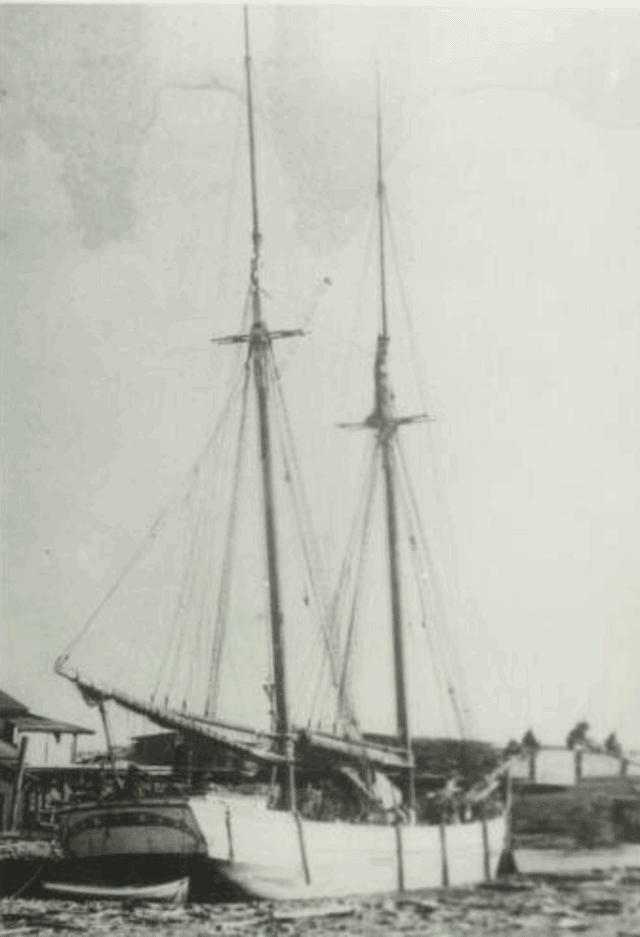
More often, though, shipwreck identification is a slow process, beginning with thorough documentation of the site. Thomsen and her team take photographs and measurements and produce to-scale sketches of the wreck. One volunteer operates an ROV that records video, while another volunteer renders 3D models.
Then, underwater archaeologists compare site observations against archival research to narrow down the possibilities. If a map from 1985 illustrates a given wreck in Lake Michigan, then the ship cannot be one that sank in 1902. If a ship has a strike in the center, then another likely drove into it, meaning it cannot be any ship that went down in a storm.
And if a shipwreck matches the era and location of the storied Lake Serpent, and there is a figurehead that looks like a lake serpent, then “we’re pretty sure it’s the Lake Serpent,” Carrie Sowden, who was on the team that identified the oldest-known shipwreck in Lake Erie, said.
Sowden is also the archeological director for the National Museum of the Great Lakes in Toledo, Ohio.
“Archeology is a science,” Sowden said. “You have to make sure that there’s a question to ask.”
Often, the question has to do with the wreck itself. Where is the hole that caused the ship to take on water, or how did the ship end up far from its route?
Sowden was on a team that investigated the Cortland, which was known to be overbuilt for its work as a freighter. The ship had two capstans, which sailors would rotate to hoist anchors or lift heavy sails, instead of one. It featured an ornamental stemhead near the ship’s hull and, curiously, an iron bell.
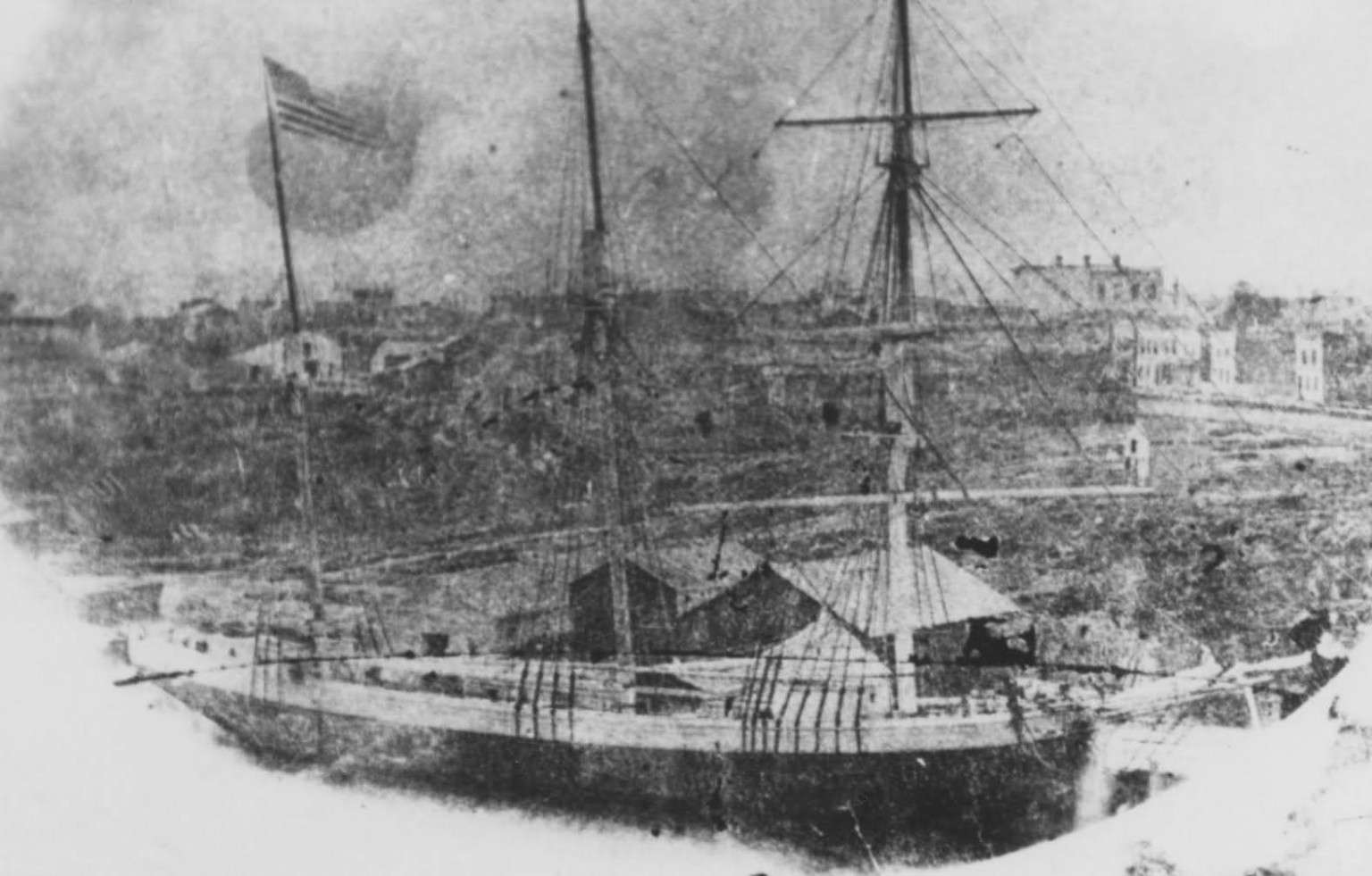
“Why would you spend all this money on a ship with extra this and that, and put an iron bell on it?” Sowden asked. “Most bells on vessels are brass or bronze, because they don’t rust.”
The team learned that the ship’s owner came from the small town in New York where the bell had been manufactured. His family owned a farm goods store and probably sold the same kind of iron bell.
“We now know more about this vessel owner, that he had this little piece in his heart for his hometown,” Sowden said. “I think it’s important to know who these people are.”
Sometimes old wrecks and artifacts lead to the telling of new stories; sometimes old stories lead to a search for the truth. Take, for example, Le Griffon.
In the 17th century, French explorer La Salle believed the crew of the ship defected and made off with the cargo. Others thought the ship was lost in a storm, or that it exploded.
What is known beyond speculation is that, in 1679, the 45-ton barque with seven cannons embarked on an expedition from Niagara Falls to Lake Michigan, navigating Lake Ontario, Lake Erie and Lake Huron, which were all uncharted waters. But on the return, it disappeared.
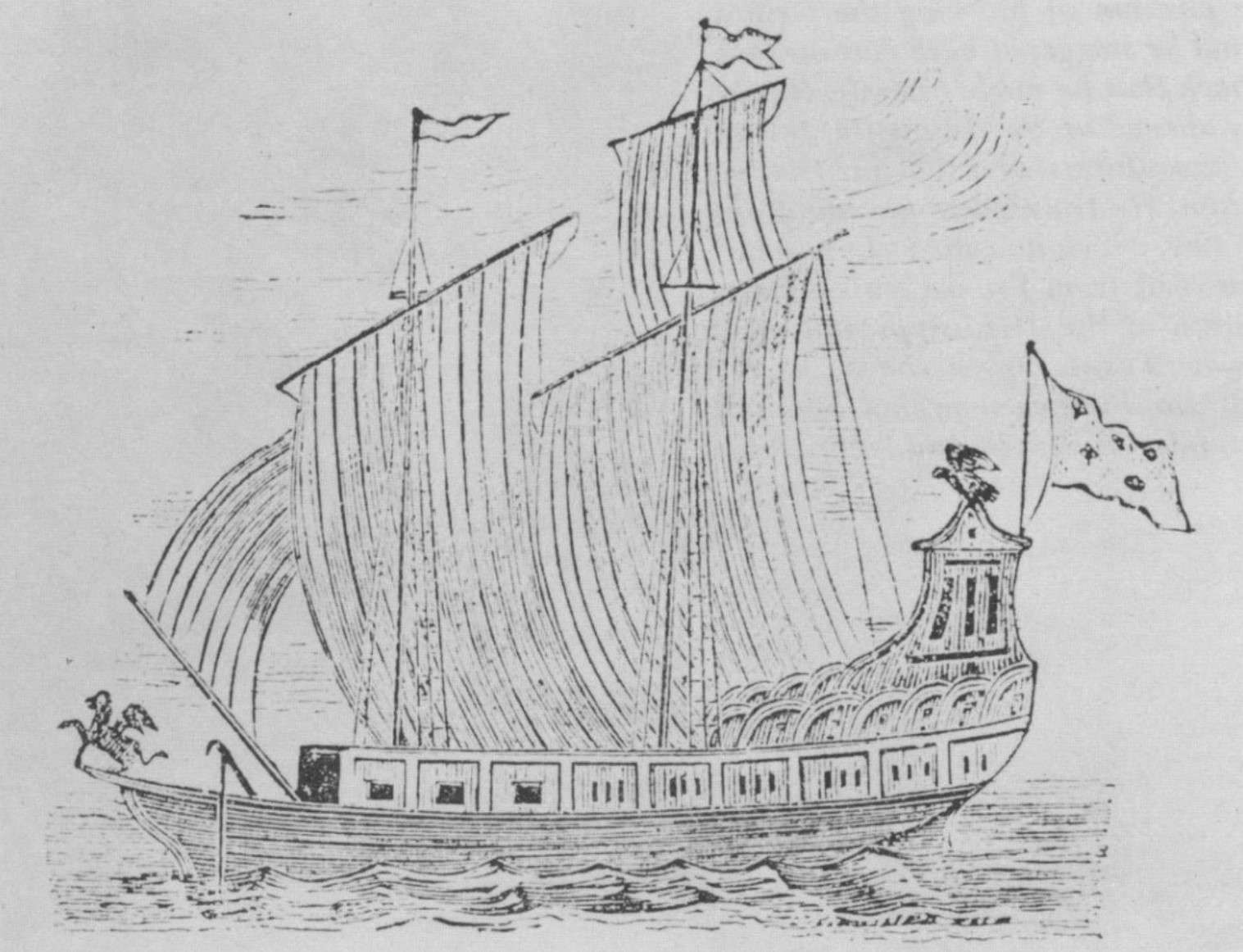
Today, Le Griffon is the “holy grail” of shipwrecks on the Great Lakes. Wayne Lusardi, Michigan’s state maritime archaeologist, has investigated 28 claims by people who said they found it.
“Only two were actually shipwrecks,” Lusardi said. “Some of them were telephone poles. Some of them were rock piles. Some of them were just boards or Christmas trees.”
“There’s an incredible folklore that’s associated with Griffin,” Lusardi added. “Everybody wants to find the Griffin.”
In reality, shipwreck discovery is only a small part of marine archeologists’ work on the Great Lakes..
Lusardi, for example, balances state needs — like documenting wrecks at risk of imminent quagga mussel colonization or looking for artifacts in areas that will soon be dredged — with his current personal interest: aviation archeology. Over the past decade, Lusardi worked to recover a P-39 Airacobra that crashed over Lake Huron in 1944, killing Lieutenant Frank Moody, a Tuskegee Airman.
He’s also been researching the disappearance of an Air Force pilot who disappeared while flying over Lake Huron near Oscoda, Michigan, and whose son contacted Lusardi for help. In this pursuit, he has spent just as much time off the water as in it.
Lusardi has read accident reports, ship logs and newspaper articles to locate the plane, and he has searched on the water, often committing his own time and enlisting others — like the state police, who are required to practice diving from time to time — to help.
Likewise, to determine where to even look for any given wreck, Valerie van Heest from the Michigan Shipwreck Research Association spends dozens of hours reading archival materials, like newspaper articles, Coast Guard records and weather reports.
“This is not for the faint of heart,” she said.
On searches, MSRA uses a family pleasure boat, a 24-foot Bayliner, outfitted with side scan sonar, which uses sound waves to visualize the lake bottom. One person drives the boat across the search area — “mowing the lawn,” as van Heest explained: “Up one lane, turn around, down another lane, always staying on track.”
Another watches the monitor, discerning schools of fish from wreckage. The weather is hot, flies abound, and it is normal to be on the water for 14 hours a day.
“It’s very meticulous,” van Heest said. “It takes hundreds of hours of experience to be ready to make a discovery.”
Van Heest started shipwreck diving as a hobby in the ’80s while living in Chicago, where dozens of shipwrecks lay just off the lakefront. But after moving to Southwest Michigan, where fewer wrecks had been discovered, she founded MSRA alongside three fellow divers.
“I thought, ‘If I’m going to continue doing what I love, we have to find the ships to dive on,’” she said.
Since 2001, MSRA has found 19 wrecks in Lake Michigan, including the John V. Moran, the most intact steamship at the bottom of Lake Michigan, and the Hennepin, the world’s first self-unloading steamer.
But van Heest still hasn’t found Northwest Airlines Flight 2501.
“The not-finding-it caused me to dig in,” van Heest said.
She has connected with 50 families whose relatives died on the flight, with her research informing her 2013 book on its disappearance.
“It was for them that I wrote the book,” van Heest said. “And it’s for them that we continue our efforts to wrap this up with a discovery.”